Data Probe 2023
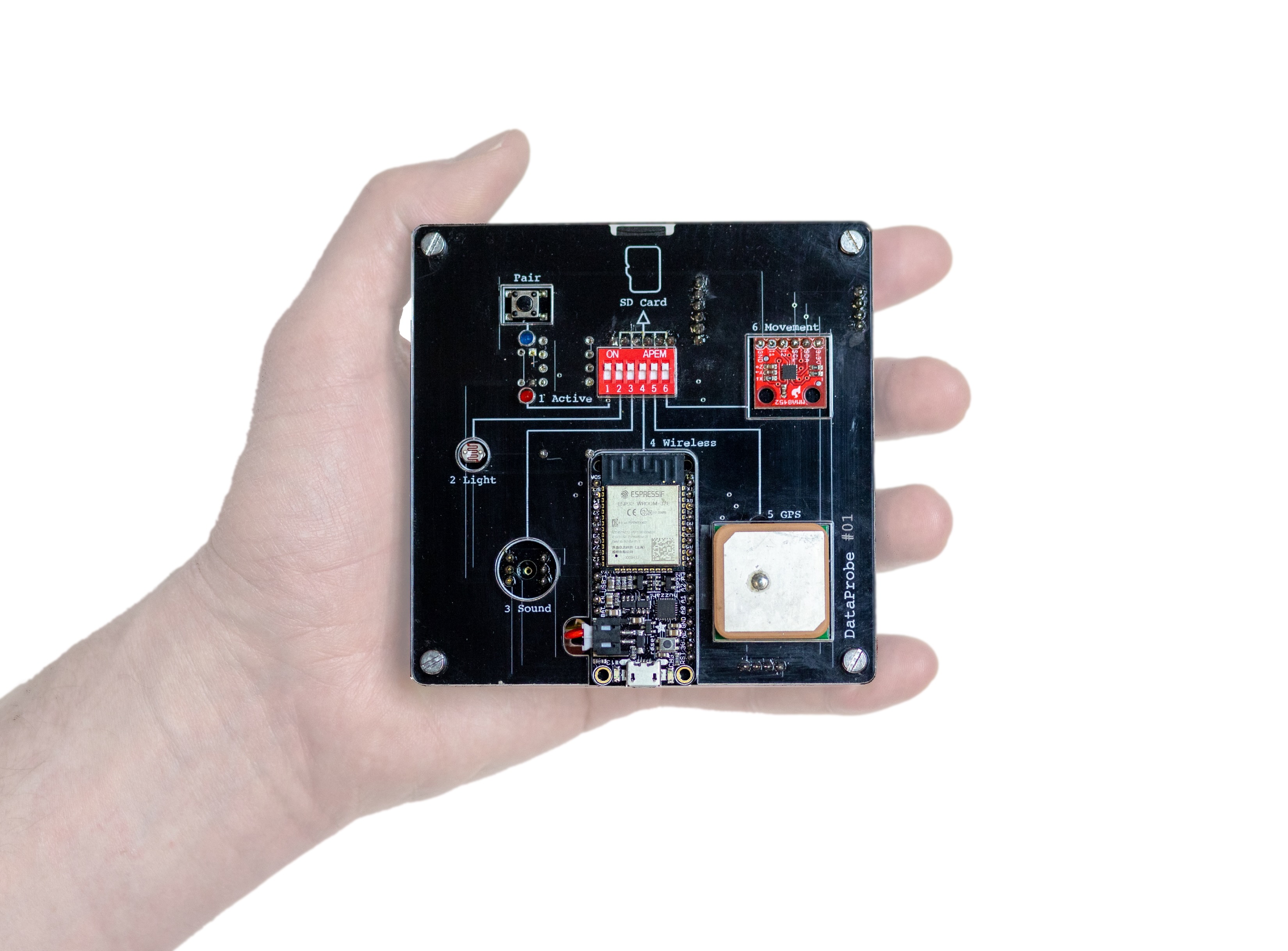
The Data Probe is a handheld electronic device designed to allow study participants to expose and review the kind of data their phones are collecting daily. The probe packages together five sensors commonly found in smart devices — light, sound, wireless networks, movement and location — recording everything they detect once a minute to a memory card. No data leaves the device: it stays entirely local.
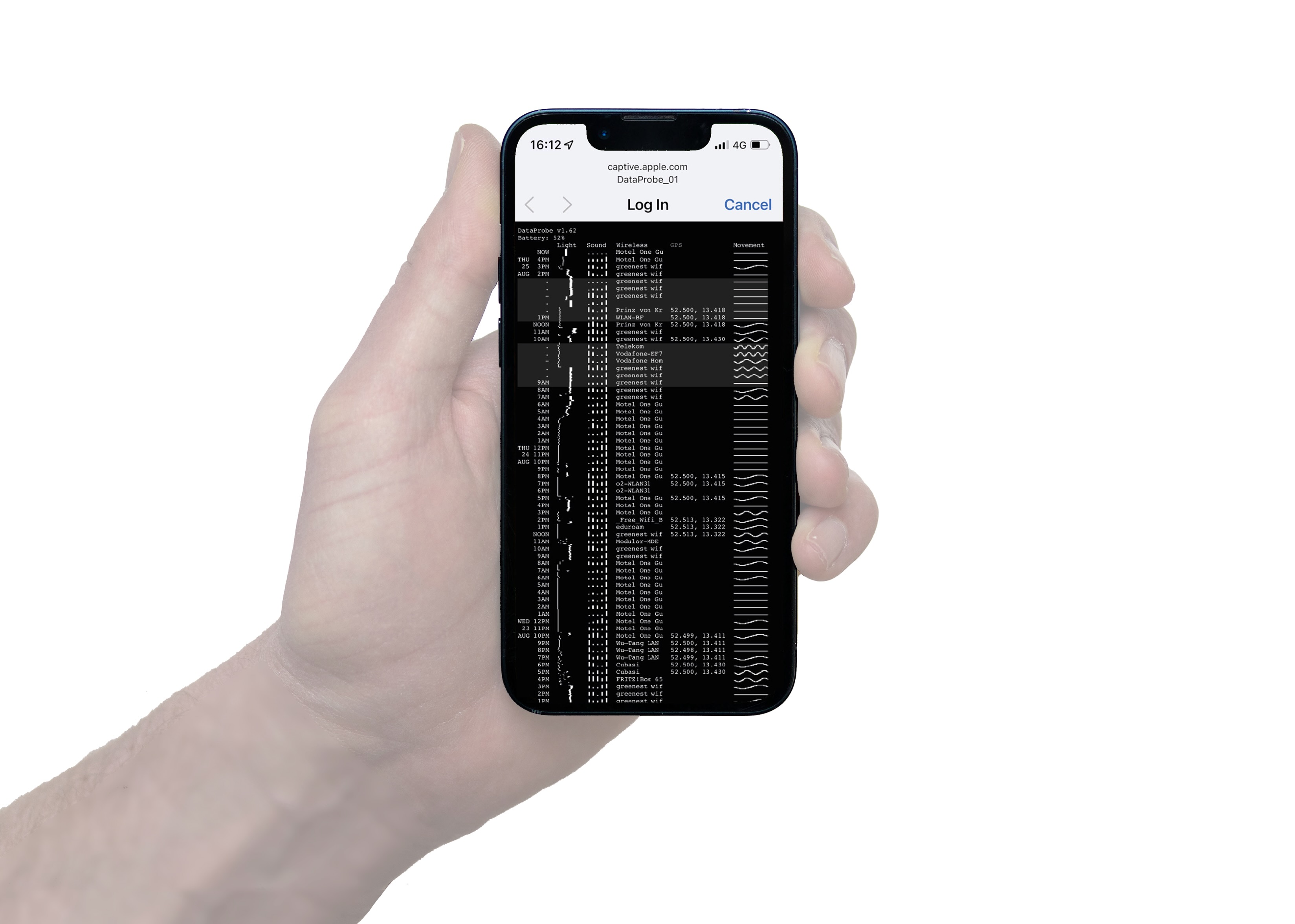
To review what the Data Probe has collected, you press the Pair button. The device creates its own WiFi network; connect your phone and a captive portal appears — a scrollable timeline of your day rendered in monospaced type and sparkline graphics.
I designed and built the electronics, PCB and software for the Data Probe, in a small batch of ten devices. The design is deliberately open for inspection, centred around six DIP switches, which allows each sensor on the device to be turned on or off. The PCB silkscreen print illustrates this data flow.
In the study, five participants carried the Data Probes for up to a month, meeting weekly as a group to discuss what they found in their data — first looking for evidence of their daily routines, then exploring their homes room by room, then taking the probe out into public spaces to see what the data revealed there. This paper describes the Data Probe design and our findings from the study:
The Data Probe study was a deliverable for the PETRAS 2 Reappearing Computer project (EPSRC EP/S035362/1) with Nick Taylor at Newcastle University and Jon Rogers at Northumbria University.